For hundreds of years, we have sailed the waters between Norway and Denmark, unaware of what lay hidden beneath us. Now a ship has been found on the seabed. For the first time since the 18th century, parts of its cargo are being brought up into daylight. Now the mystery of what really happened can begin to unravel.
The wreck lies at a depth of 600 metres in the Skagerrak. To reach it, archaeologists and researchers from the Norwegian Maritime Museum must travel for hours by boat before work can begin. Together with the crew on board, they lower a remotely operated underwater drone down into the darkness.
Attached to a kilometre-long cable and equipped with a camera and robotic arm, the drone moves slowly across the wreck. Down there, the team targets the cargo. Using suction cups, the finds are carefully lifted up to the boat.
It is a demanding mission. This far out at sea, the team is entirely dependent on good weather. There are no comparable projects at this depth anywhere in Northern Europe — and the work demands constant adaptation of archaeological methods to a new environment.
What we know so far:
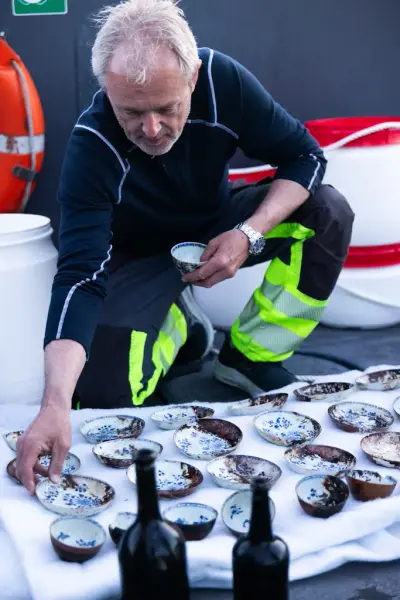 Sindre Kinnerød / Flash Studio
 Discovered by a private individual
The wreck was discovered by Espen Saastad, owner and watch designer at Saastad Ur in Porsgrunn in south-east Norway, who also operates a small ROV and survey company. Saastad is now taking part in the recovery of artifacts, together with the Norsk Maritimt Museum, that leads the investigation of the wreck.
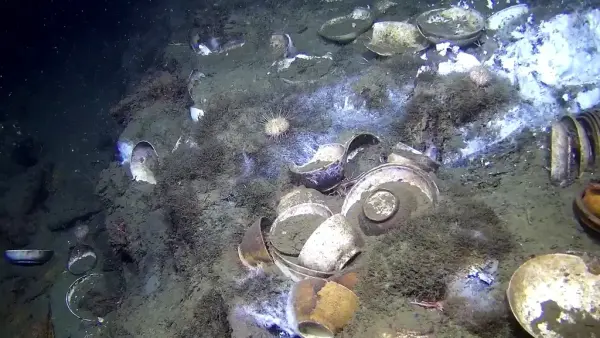 Espen Saastad
 A fully laden ship from the 18th century
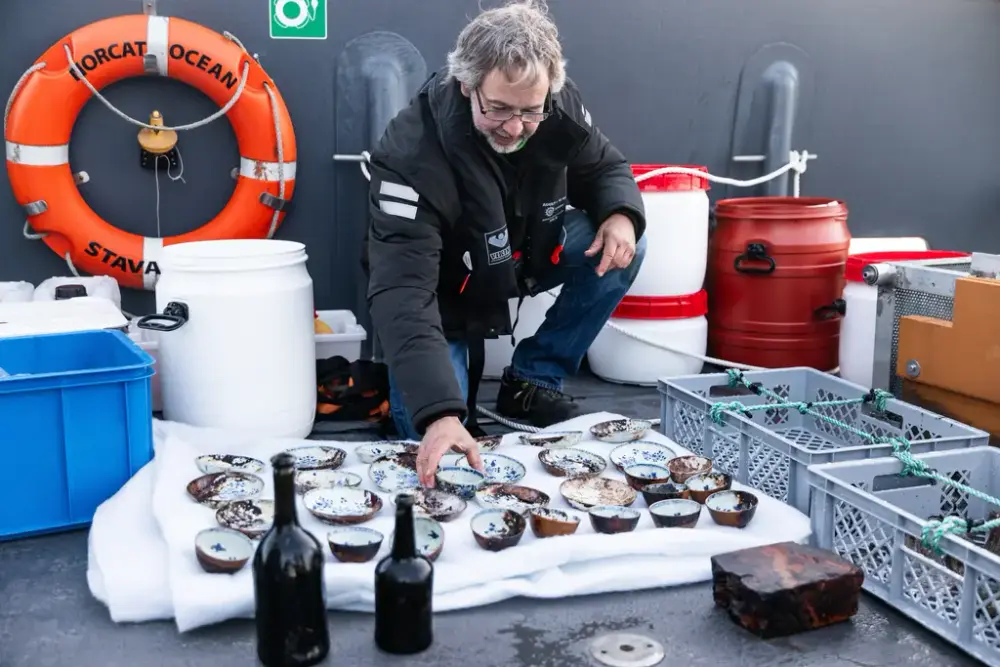
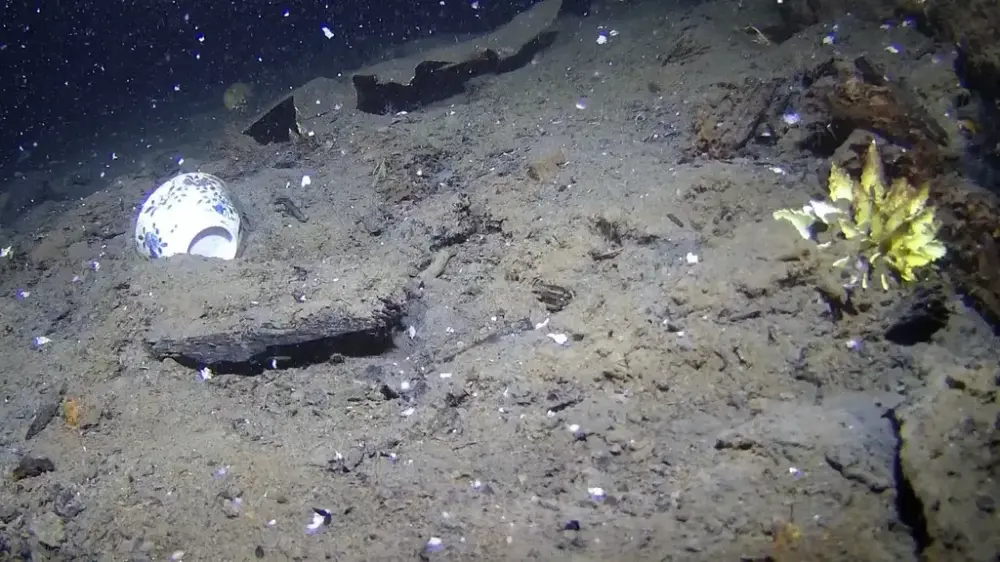
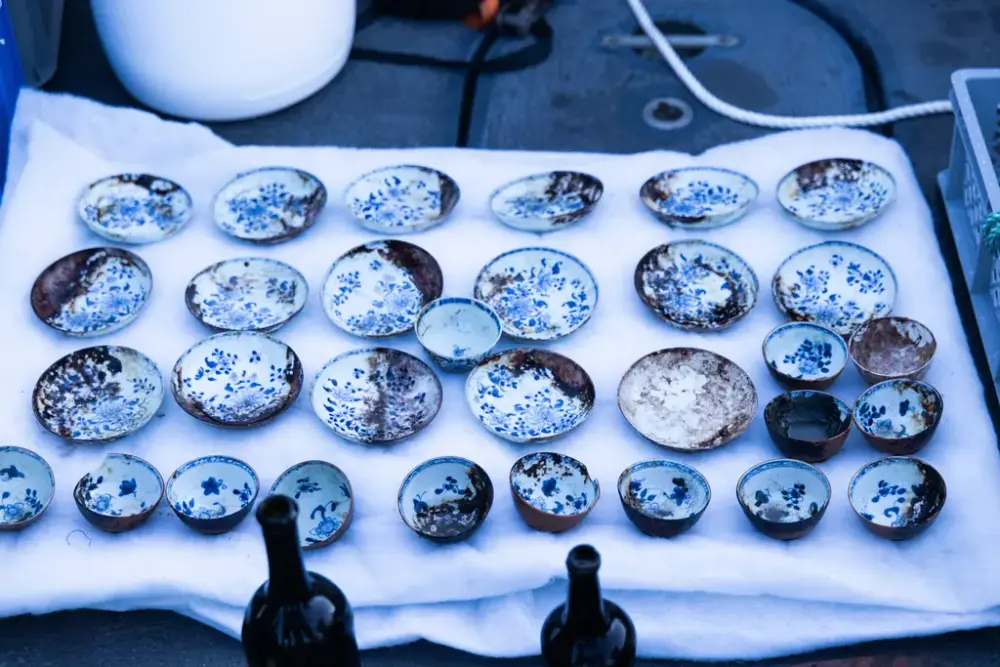
The ship lies at 600 metres depth with an exceptionally well-preserved cargo, like a time capsule. So far, large quantities of Chinese porcelain, parts of chandeliers, stemmed glasses and barrels of grain have been identified.
The artefacts suggest a date towards the middle of the 18th century. Crates have been found that appear to contain textiles and various organic materials — possibly tea, herbs and medicines.
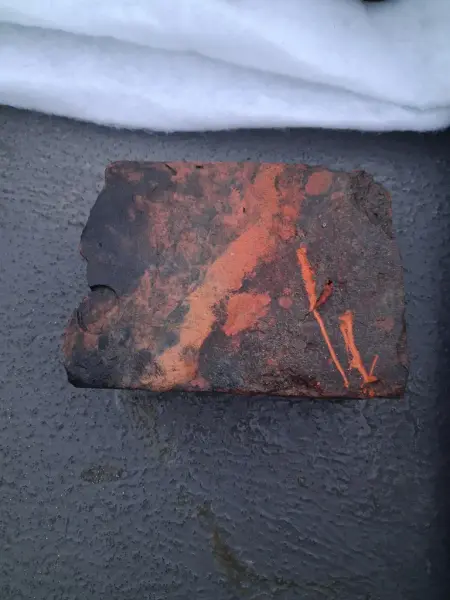 Frode Kvalø
 A brick from Lübeck
Among the more intriguing finds was a brick — something that might easily have been overlooked. But a small stamp reveals that it came from the Lübecker Ratsziegelei, a brickworks in Lübeck that was in operation from the 15th century until 1772.
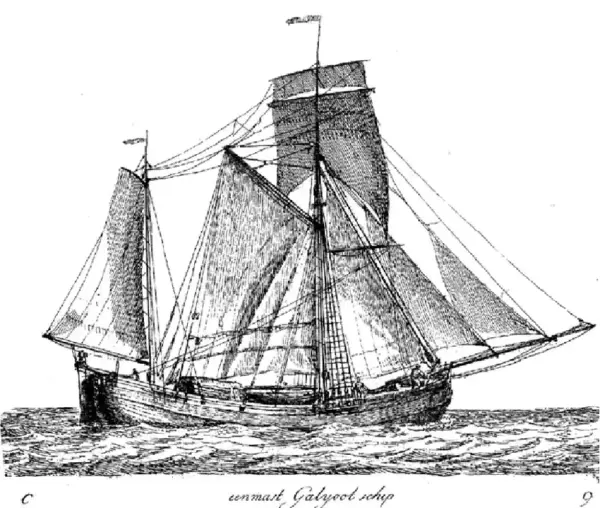
A two-masted galliot
Based on what we have observed, we believe the vessel is round-sterned, possibly of the type known as a galliot — a characteristic merchant vessel in Northern Europe. In the 17th century, such ships had a single mast positioned one third of the way along the hull. By the 18th century, the rigging had evolved to two or three masts. Our ship has two masts and measures 22 metres in length.
This find is not only extraordinary, it’s also of considerable scientific value and demonstrates an important technological advancement in underwater archaeology. It provides us with new and valuable insight into Norway’s and Northern Europe’s maritime history, and will be of great importance for archaeological research and dissemination, as well as cultural heritage management.
Questions still unanswered:
- 1/1
Sindre Kinnerød /Flash Studio
Why did the ship sink?
The ship's structure appears to be standing roughly upright on its keel on the seabed. Near the bow, two anchors and hawse pipes have been found. At the stern, the end of a sternpost is visible — a structural element that holds the hull together at each end. The rudder is missing. Along both the starboard and port sides, the full hull is visible in the form of frames, ceiling planking and outer hull planking — that is, the ship's internal structure, inner planks and outer shell.
The keel must lie some distance down in the sand, clay, mud and other material on the seabed, though how much of the structure is buried remains unclear. The cargo largely appears to be contained within the ship's structure, except where a trawl has dragged some of it out at a couple of points. Various items of ship's equipment — blocks, hawse pipes, anchors, rope, a possible telescope, the galley, an iron stove and more — can be observed, but no cannons have been found.
What caused the ship to sink? Was it a storm? And what happened to the people on board? Ships of this type typically had a crew of five or six. Did they escape before the vessel went down, or did the sea become their final resting place?
- 1/1
Espen Saastad

Where did the ship and its cargo come from?
The Porcelain Wreck carries a combination of cargo unknown from any other shipwreck find in Northern Europe, offering extraordinary insight into the economic and trade-political changes that defined the 18th century. The ship carried at least three classes of goods:
- High-status items in the form of chandeliers, possibly German or English — at a time when chandeliers were reserved for the very highest levels of society.
- Chinese porcelain — which the emerging middle classes embraced enthusiastically during this period.
- Bulk commodities such as grain.
We have now recovered grain samples for DNA analysis. Could this grain have come from the Baltic Sea region, which at the time served as Northern Europe's breadbasket? If so, it may help shed light on the composition of the cargo as a whole. Stemmed glasses, bottles and porcelain are currently being cleaned and conserved before further examination at the museum.
The porcelain is predominantly decorated in blue and white. Some pieces are Batavia ware, glazed brown on the outside with blue and white decoration on the inside, and some may be Blanc de Chine, a type of white porcelain. The porcelain is believed to have been produced around the middle of the 18th century — consistent with findings from the ship's construction, which also points to the 1700s. One of the cups appears to bear the remains of a monogram on its base. It will be fascinating to see whether further examples emerge and whether the monogram can be deciphered and linked to a possible owner or customer.
- 1/4
Espen Saastad - 2/4
Espen Saastad - 3/4
Espen Saastad - 4/4
Espen Saastad
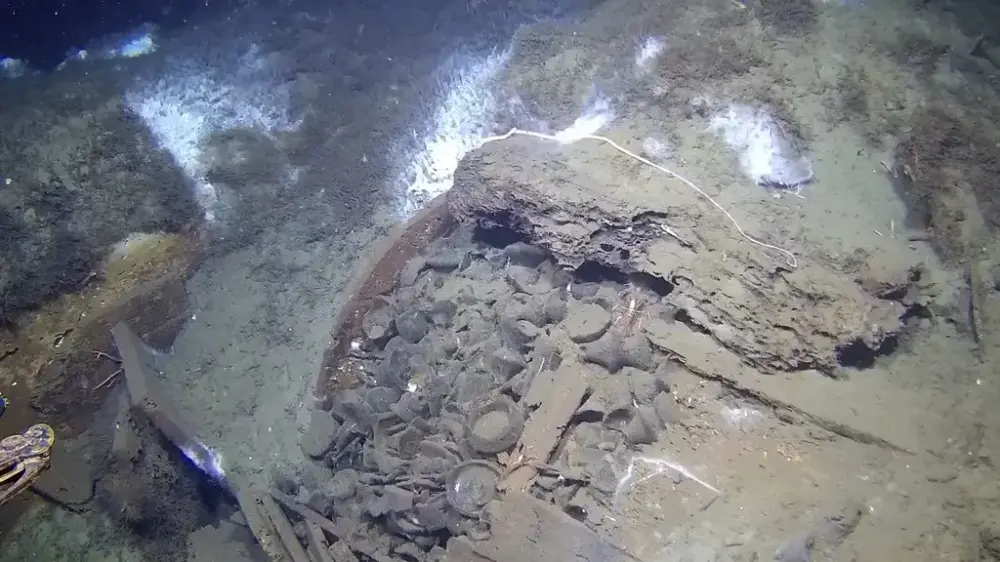
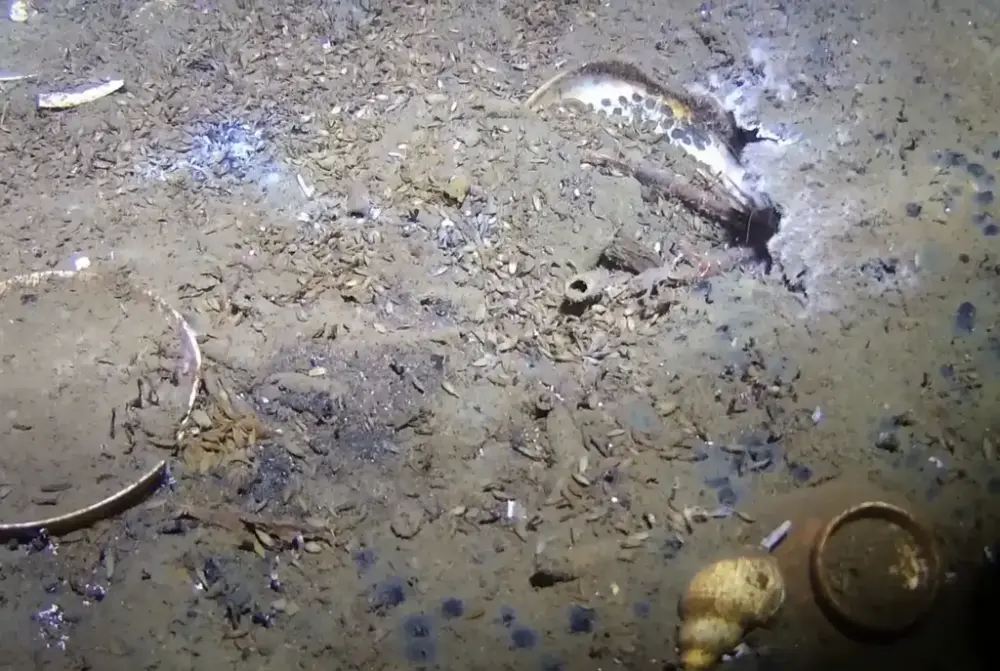
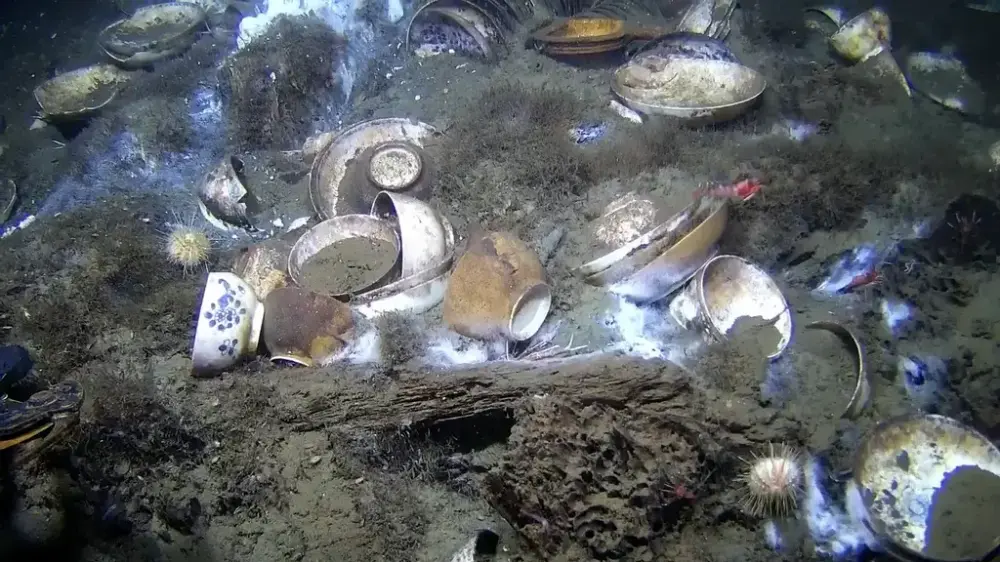
I had to rub my eyes when I grasped the scale of this find. It is almost beyond belief. I look forward to learning more.
Where was the ship headed?
It remains unknown where the ship came from and where it was bound. It may have had connections to Lübeck, given that the brick we found originated there. The brick was part of the galley — the ship's kitchen. However, a galley may have been repaired or replaced during a ship's lifetime. Further finds will be needed to establish the home port, the route and the vessel's name.
The combined evidence suggests the ship sank around 1750 — a period marked by profound political, economic and social change in Northern Europe. Trade in raw materials and luxury goods, which had previously taken place in separate markets, was now developing into an interconnected maritime trading system. At the same time, the rise of the middle classes and the growth of international trade drove a rapid expansion in commerce and shipping. This was the beginning of the modern consumer society — and the beginning of the position Norway would come to occupy at the very top of global maritime transport in the centuries that followed.
- 1/1
Sindre Kinnerød/Flash studio
Shipping has been central to Norwegian culture since time immemorial. This discovery could offer new insights into Norway’s coastal heritage. The recovery effort highlights the Norwegian Museum of Cultural History unique breadth of expertise and its ability to undertake complex projects that advance research and serve the public interest.
Come and see for yourself
The Norwegian Directorate for Cultural Heritage has contributed 2.9 million kroner to the project. The shipwreck is automatically protected under the Cultural Heritage Act. The plan is for the rare ship's cargo to be presented in a larger permanent exhibition at the Norwegian Maritime Museum in Oslo in the future. A small number of objects are being made available to the public now — a unique opportunity to experience the finds before they move on to conservation and research.